
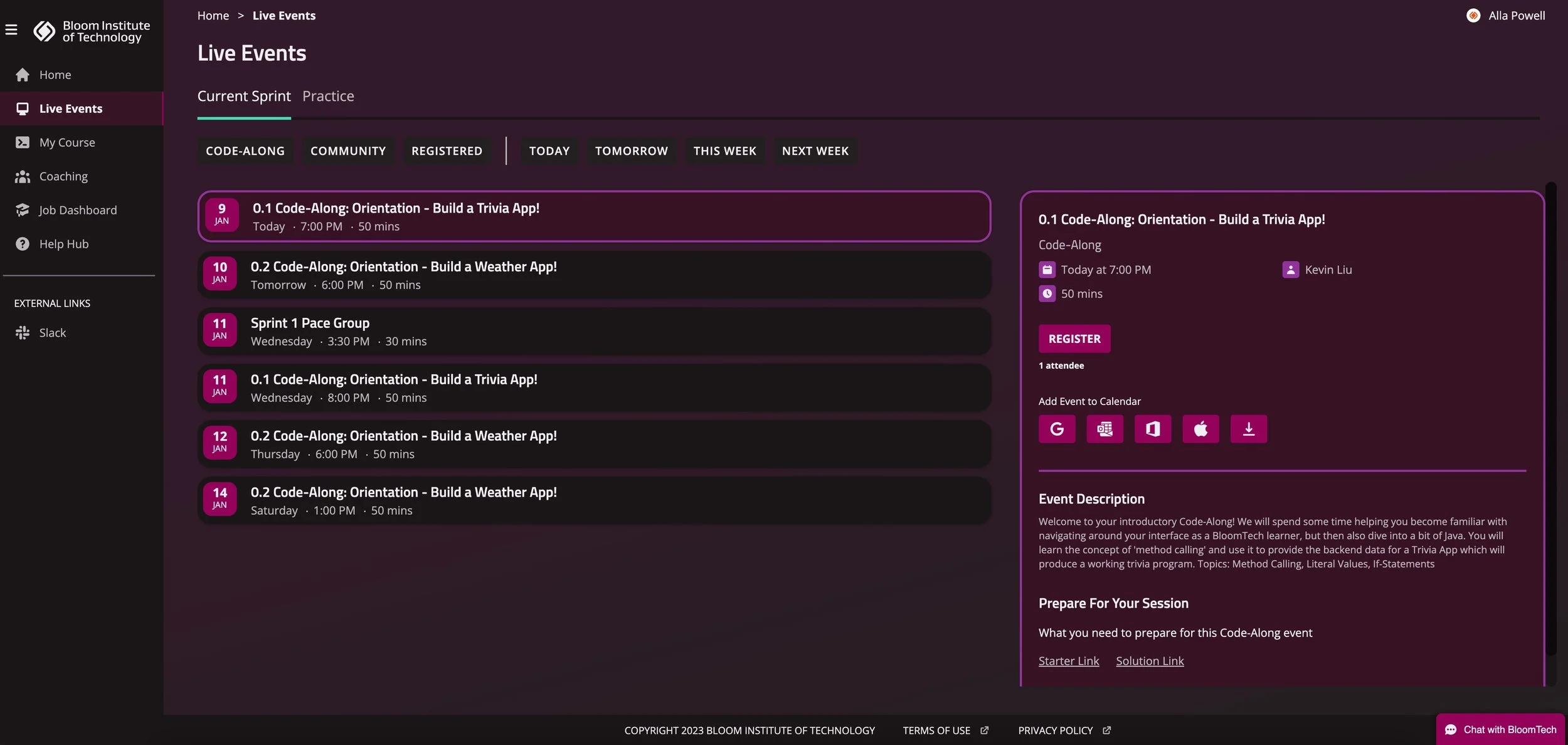
How might we transform instructor-led learning into a scalable, asynchronous system without losing quality or engagement?
Transforming instructor-led learning into a scalable, asynchronous system
Roles: Senior Program & Content Designer, Design Lead
I led the transformation of BloomTech’s curriculum from live, Zoom-based instruction to a structured, asynchronous learning system through CareerFlow. I oversaw the production of 600+ curriculum assets and built the systems needed to ensure consistency, quality, and scalability across programs.
CareerFlow: a shift to flexible, asynchronous learning
Before CareerFlow, BloomTech’s learning model was built around live, instructor-led courses. While effective, this approach was difficult to scale and led to inconsistent experiences across instructors and programs.
CareerFlow was the platform and experience layer that enabled a shift to flexible, asynchronous learning.
A walkthrough of the CareerFlow platform.
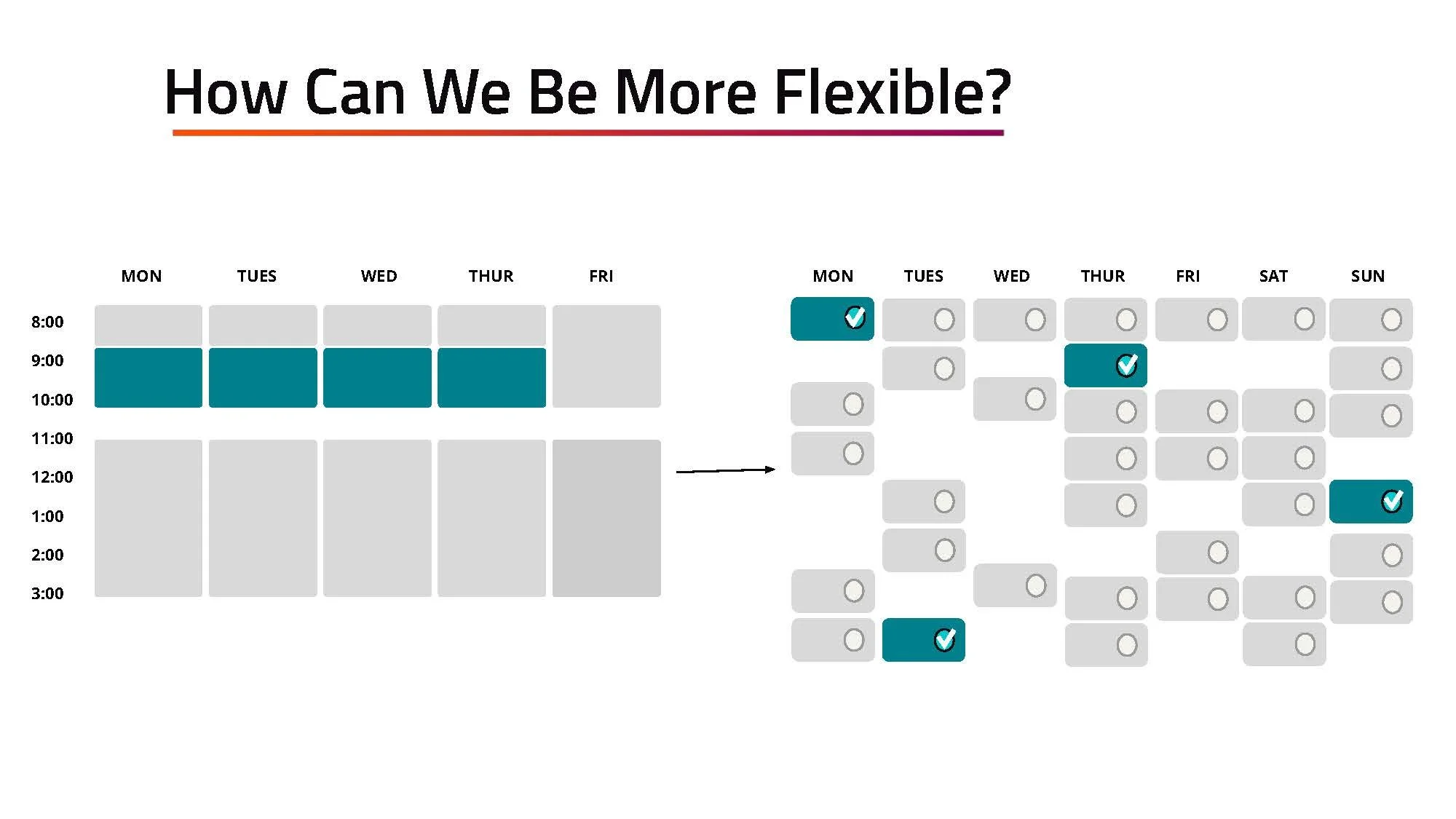
It was introduced to support a more flexible and scalable model by shifting from primarily live instruction to a system that supports asynchronous learning, varied content formats, and self-paced progression. It allows learners to move through material at their own pace while still accessing live instruction, coaching, and support as needed. Rather than following a fixed timeline, learners progress by demonstrating competency in key skills.
The platform brings together multiple components, including curriculum content, live instruction, coaching, and job search support.
Structuring the Learning Experience
To design the learning experience for the new CareerFlow approach, we needed to review, reorganize, and rebuild the existing curriculum and content.
The goal was to help learners progress through the material from multiple sources, accommodate various learning styles, build understanding across different media, and foster comprehension over time.
My Role
Led a team of educators and subject matter experts
Defined standards for content structure, tone, and delivery
Established systems to ensure consistency across programs and formats
Oversaw production and quality of 600+ curriculum assets
Built workflows to support scalable content creation
The Problem
Learners had limited flexibility in how and when they engaged
Learning experiences varied across instructors and programs
Learners often experienced fragmentation and inconsistency
Content was difficult to standardize, maintain, and scale
Key parts of the experience were distributed across multiple systems
Rather than replicating live instruction, we defined clear, repeatable experiences that support different learning modes and reinforce progress. Content was redesigned into flexible, digestible units that support different learning speeds without losing structure.
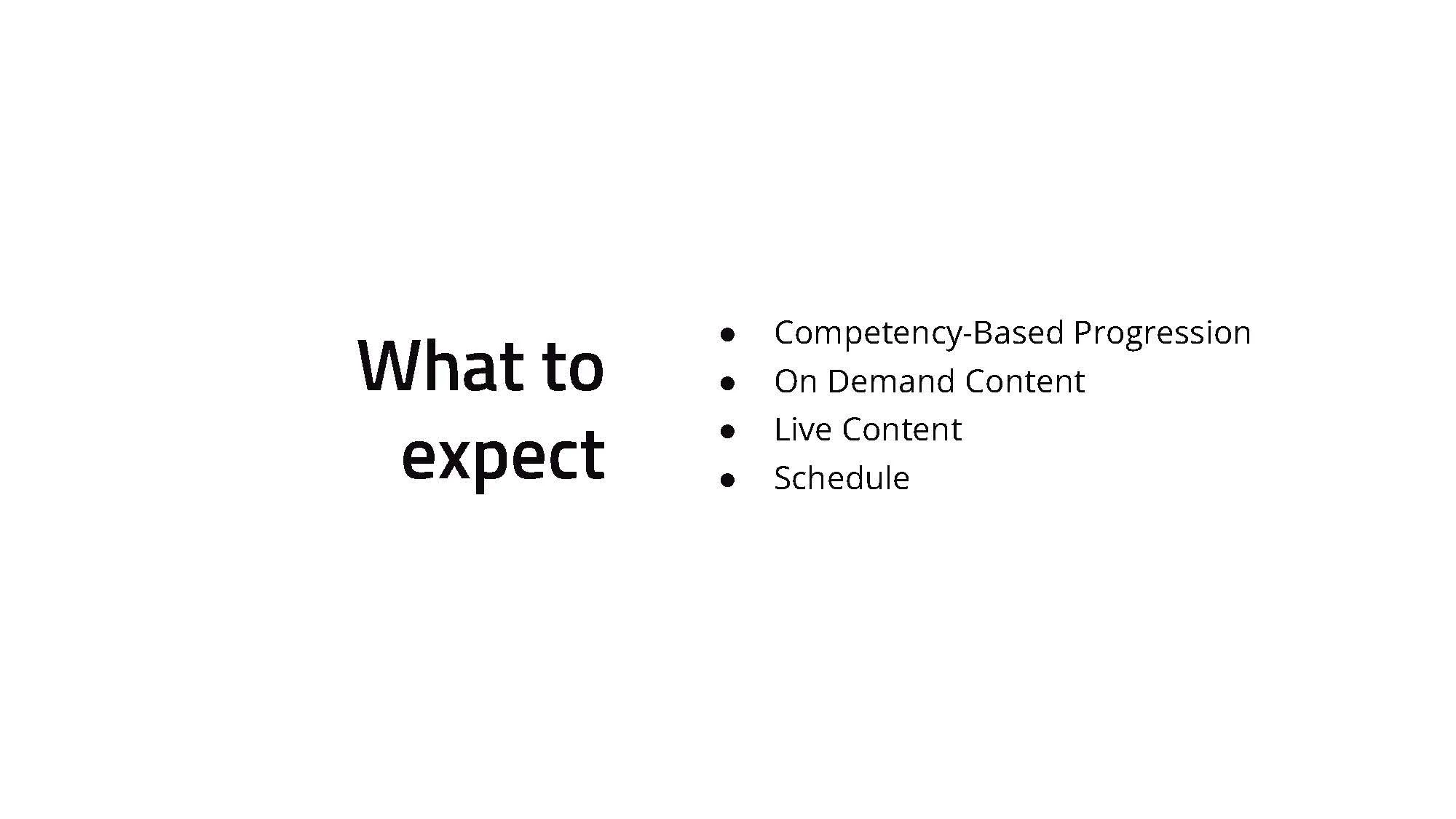
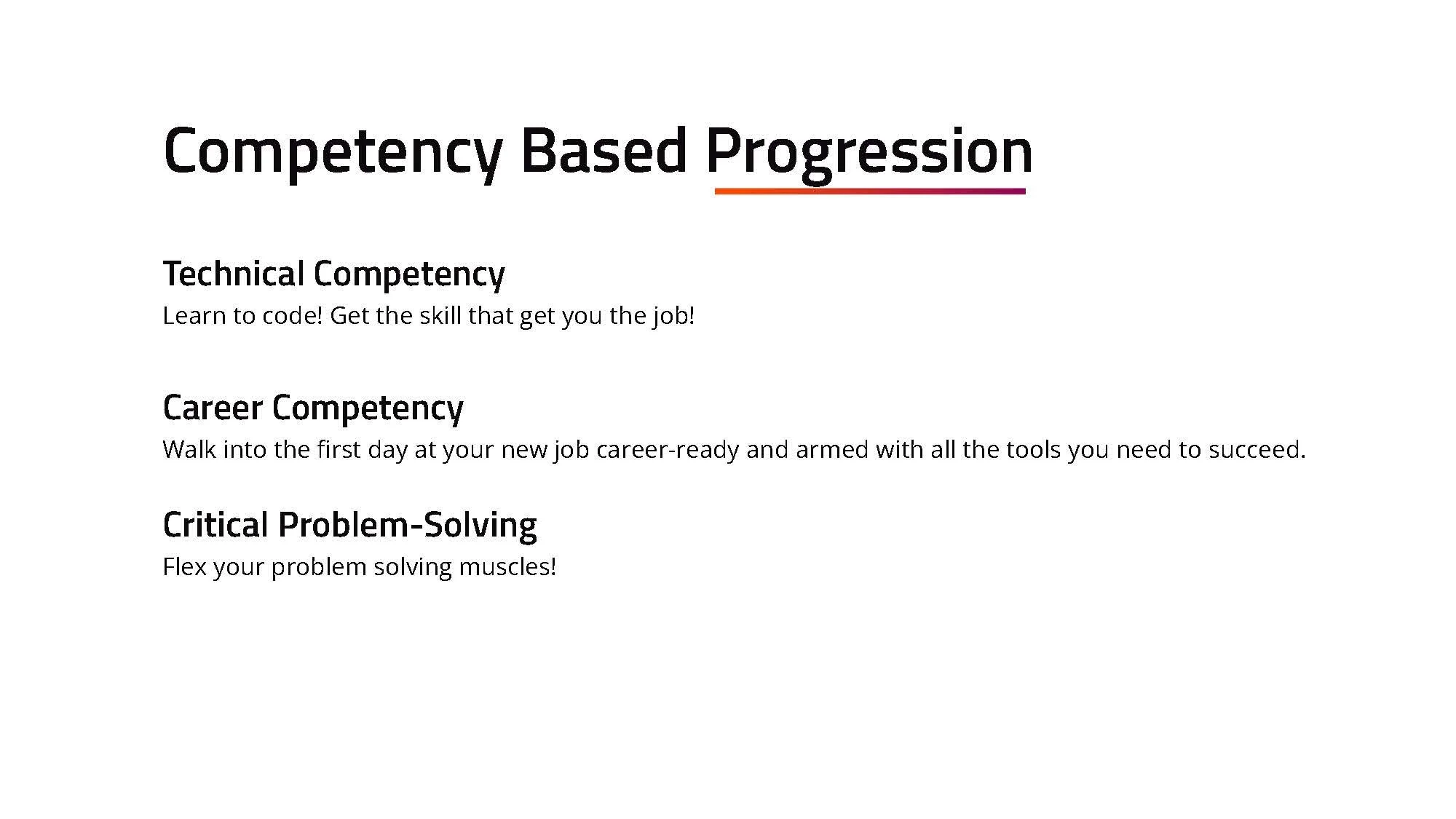
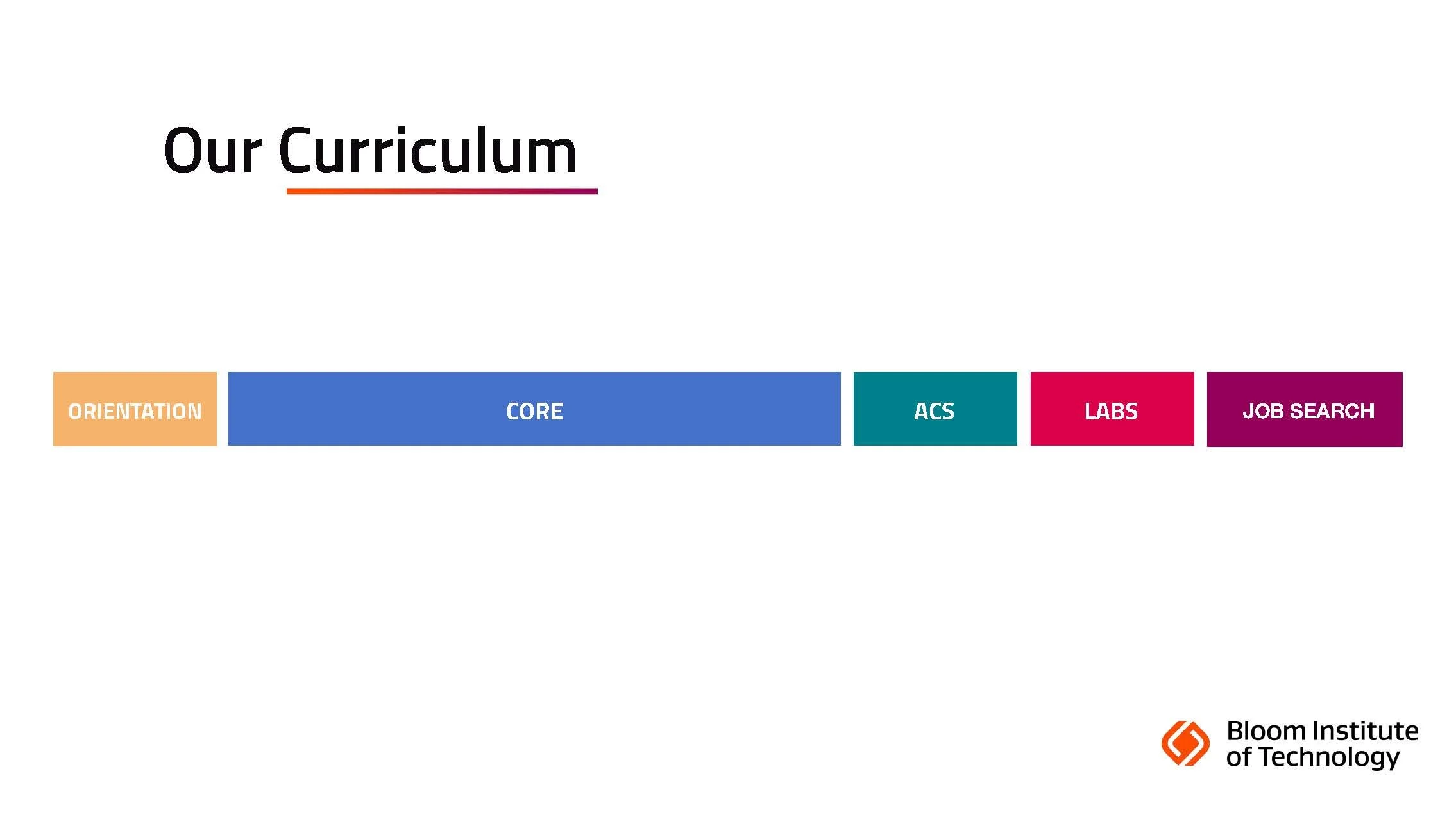
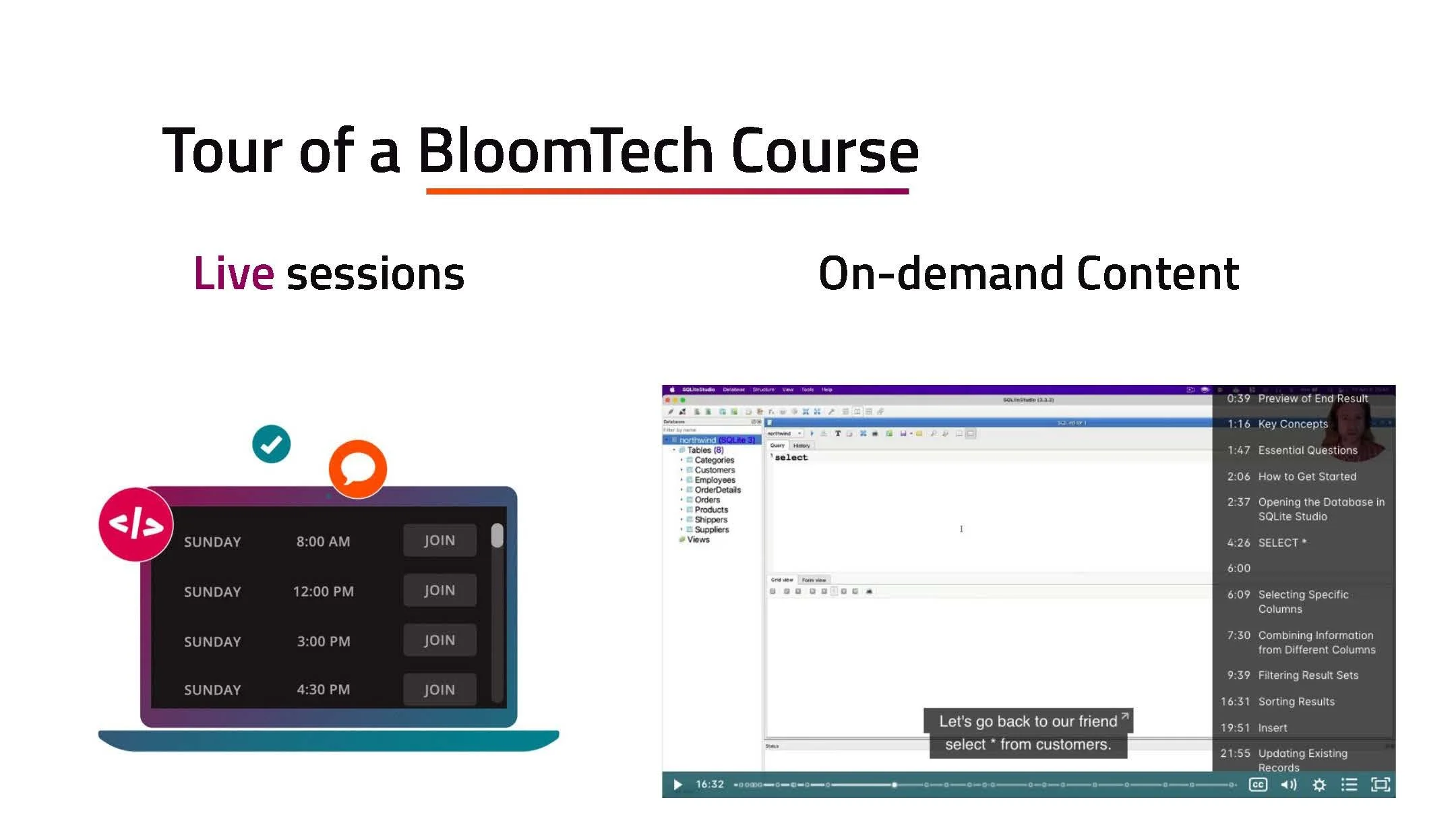
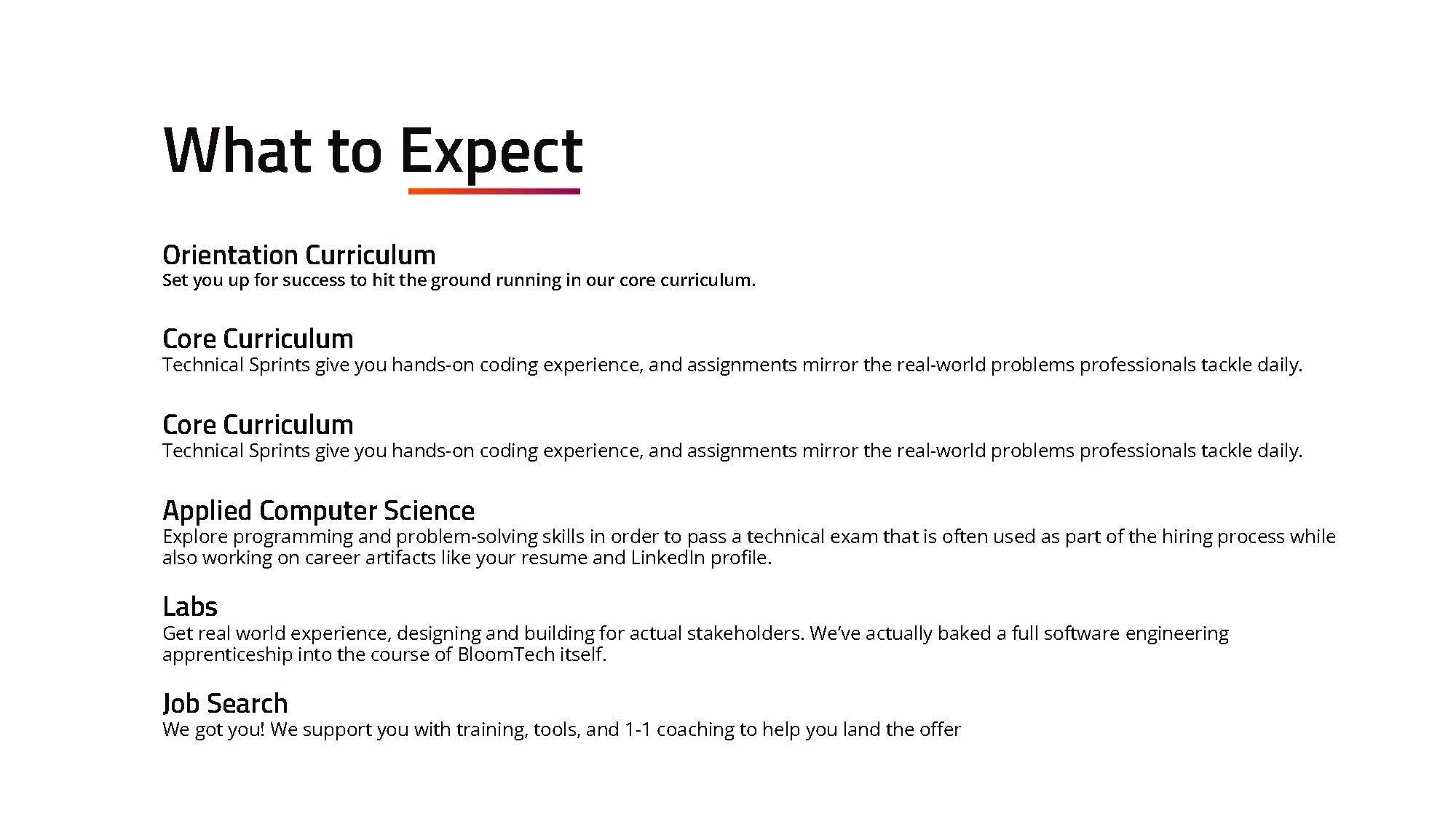
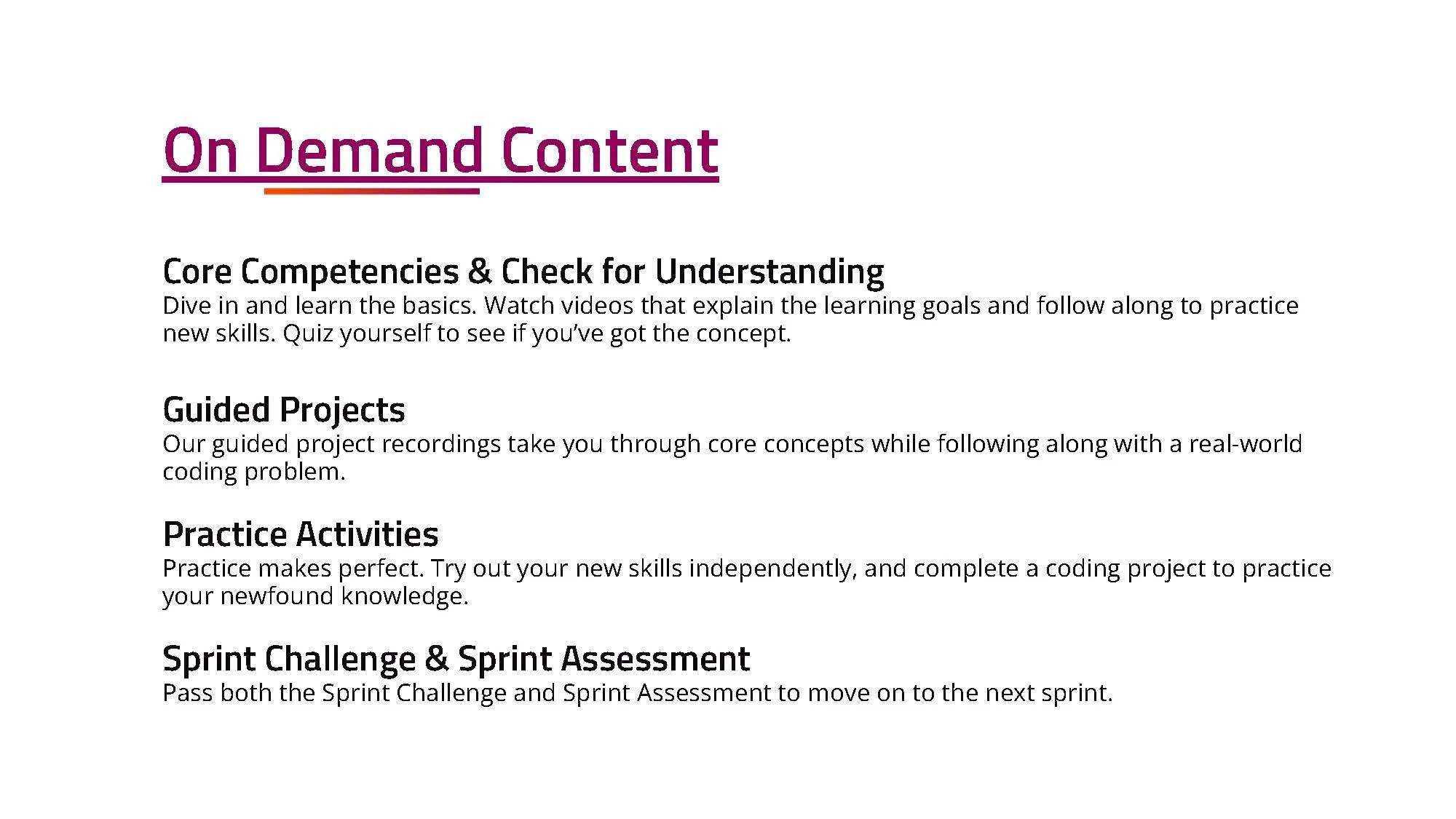
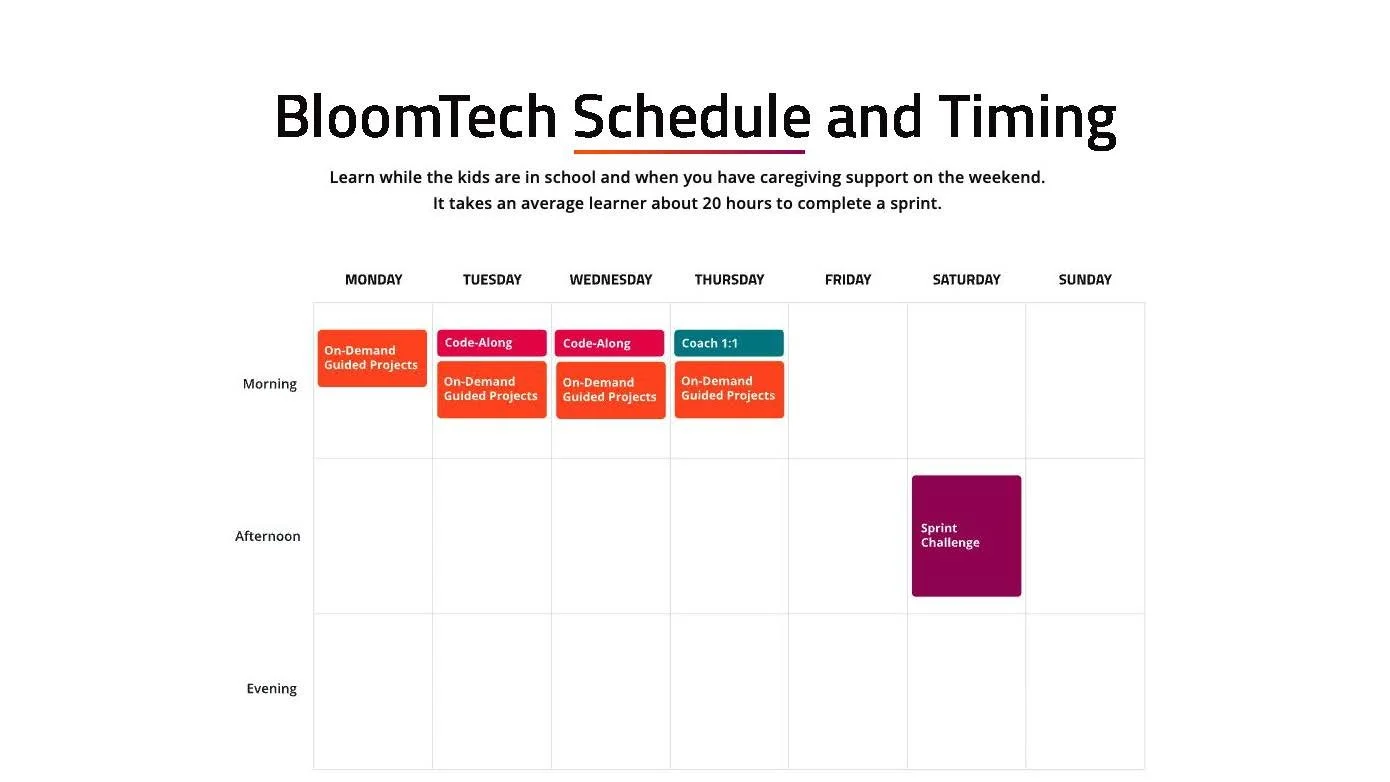
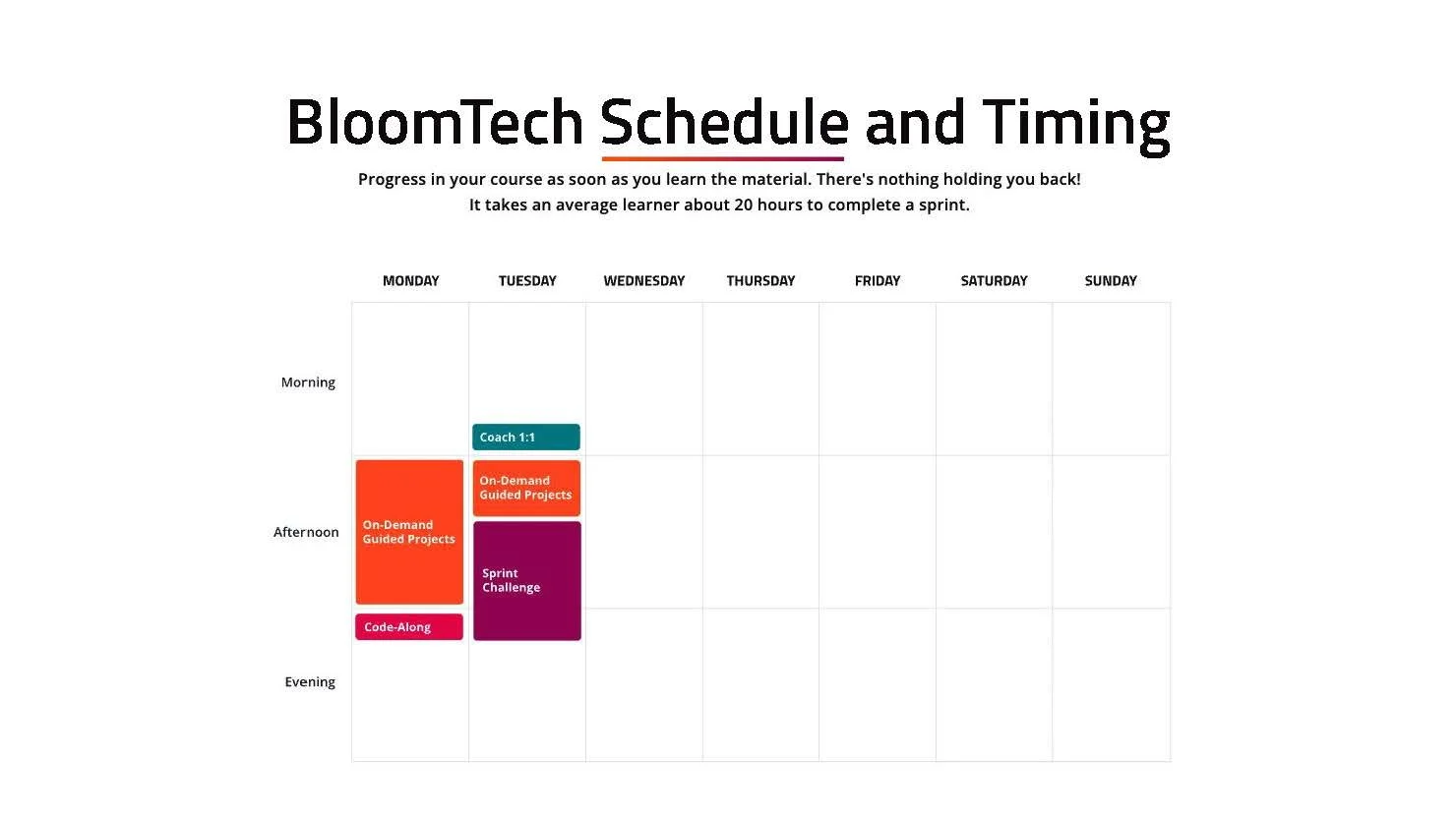
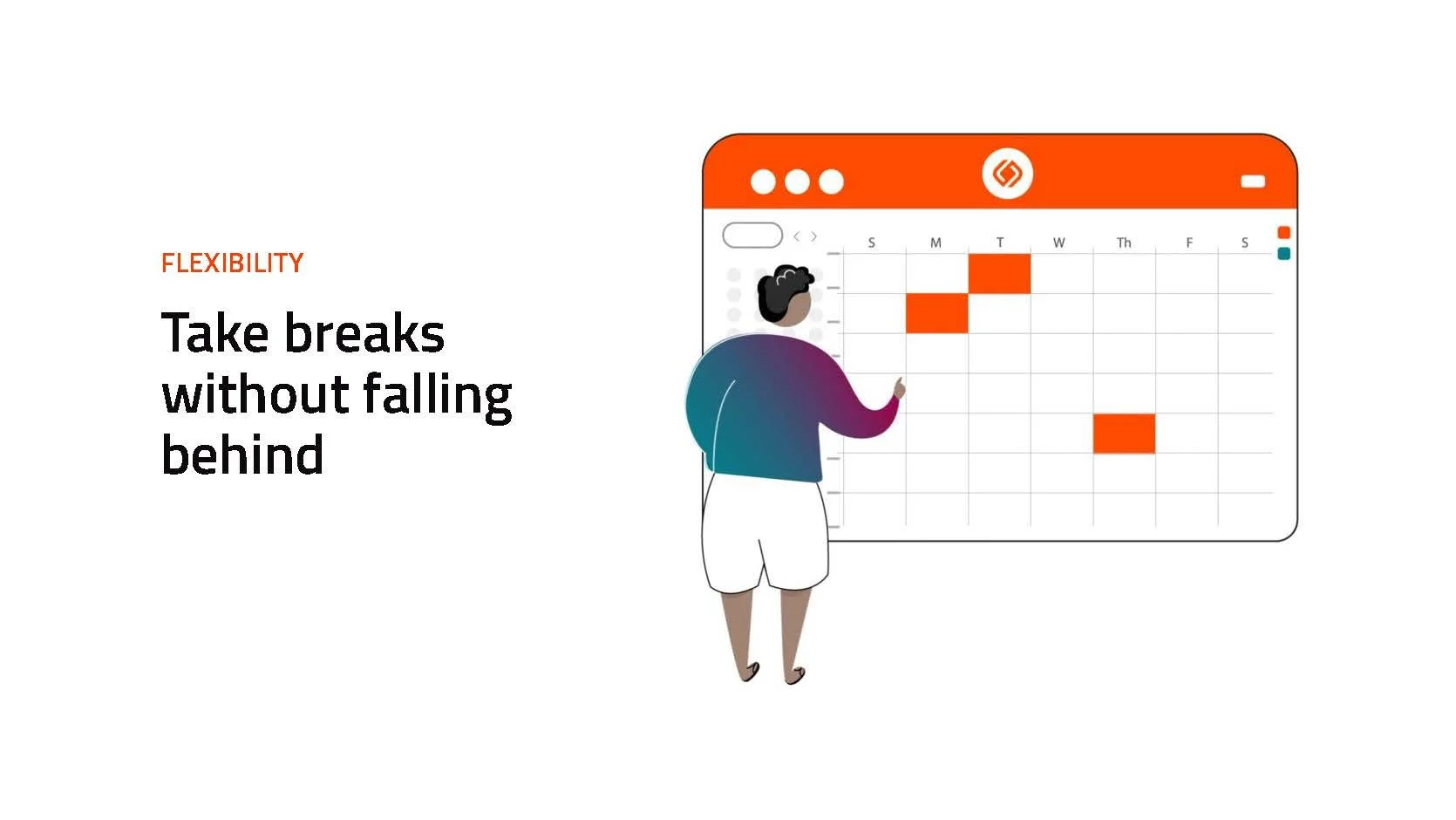
Structured Learning Pathways
Clear sequencing from introduction → practice → application
Lessons broken into manageable components
Ability to revisit and reinforce concepts
Explicit learning objectives and outcomes
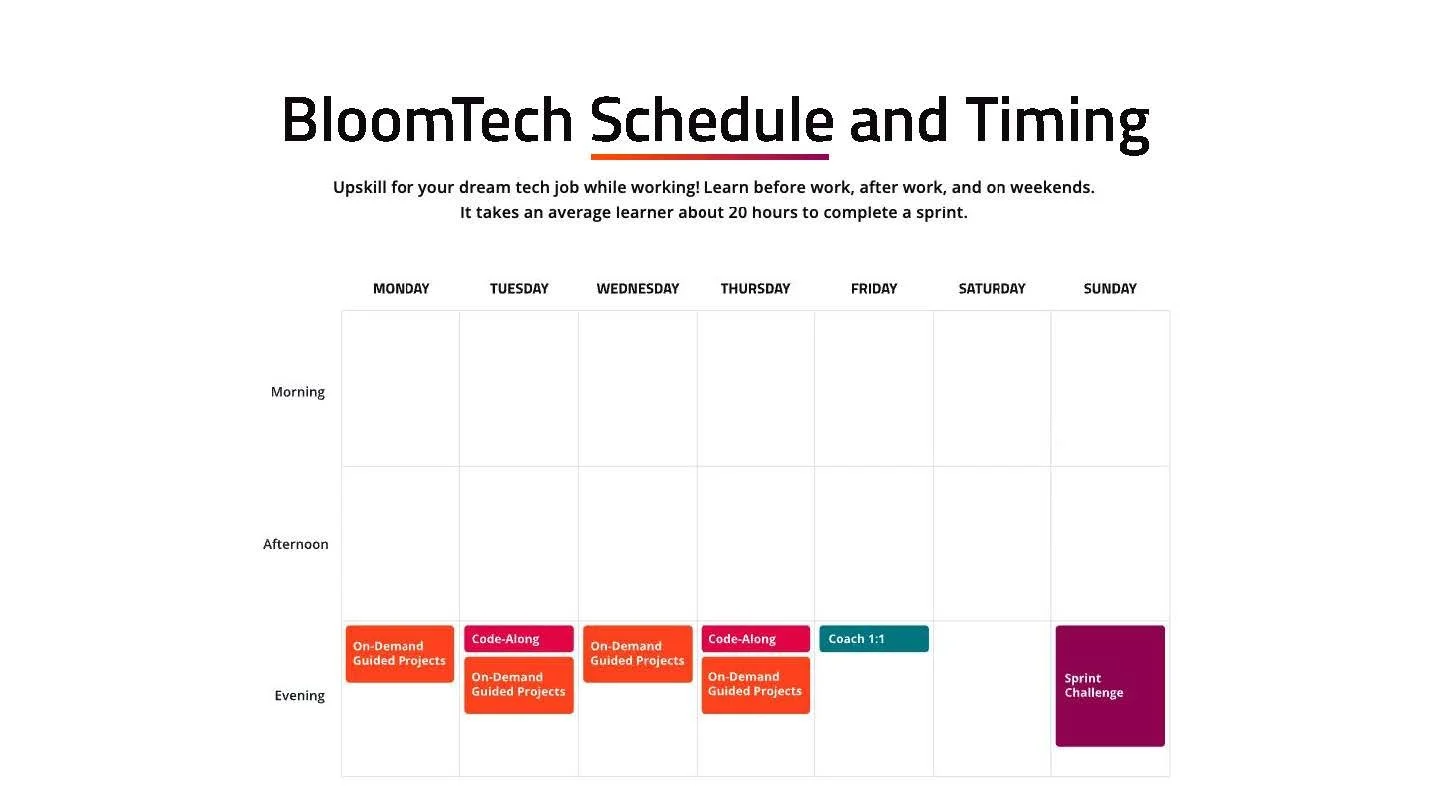
Layered Learning Model
Learn through written content and video instruction
Practice through guided exercises and projects
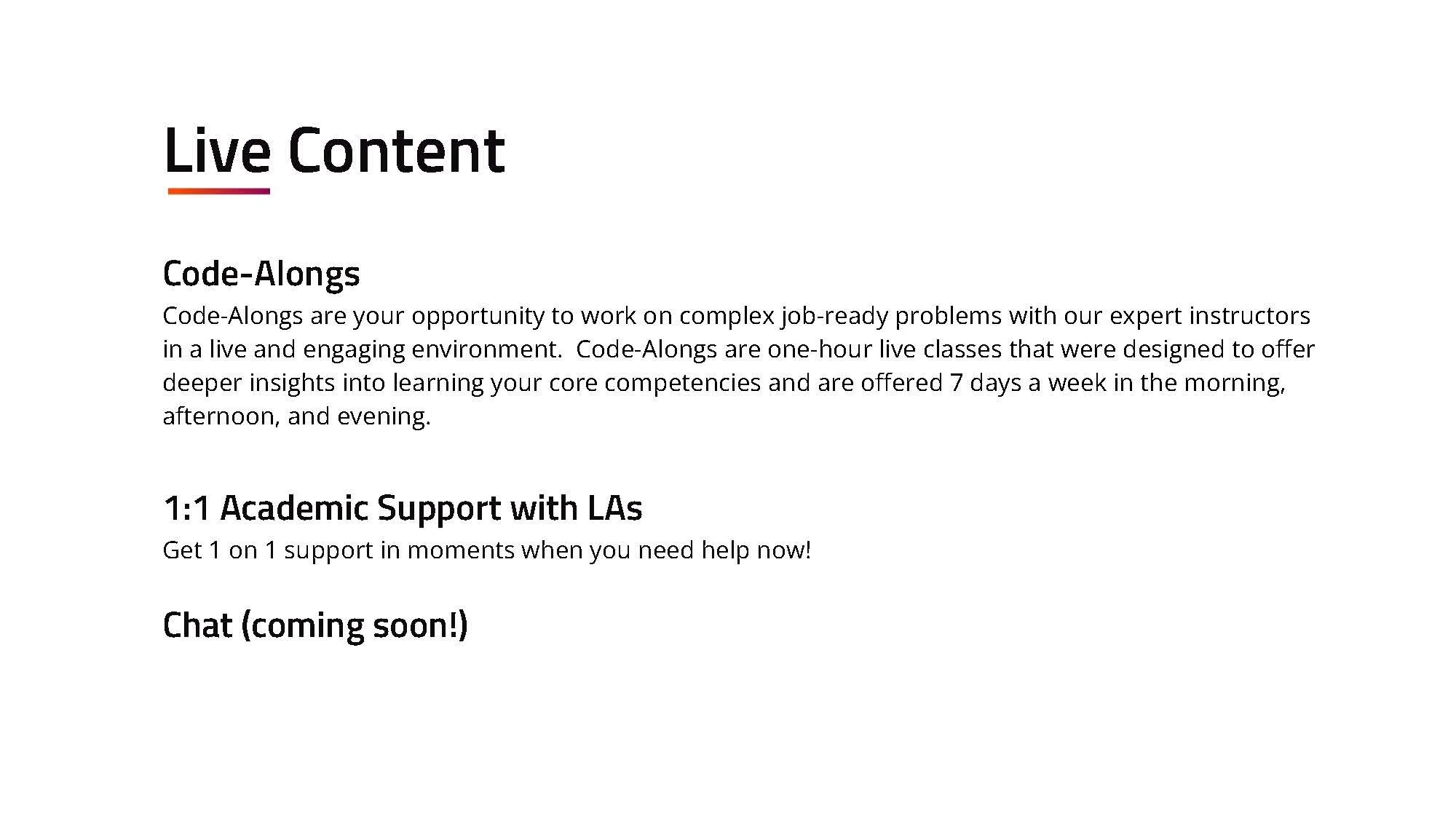
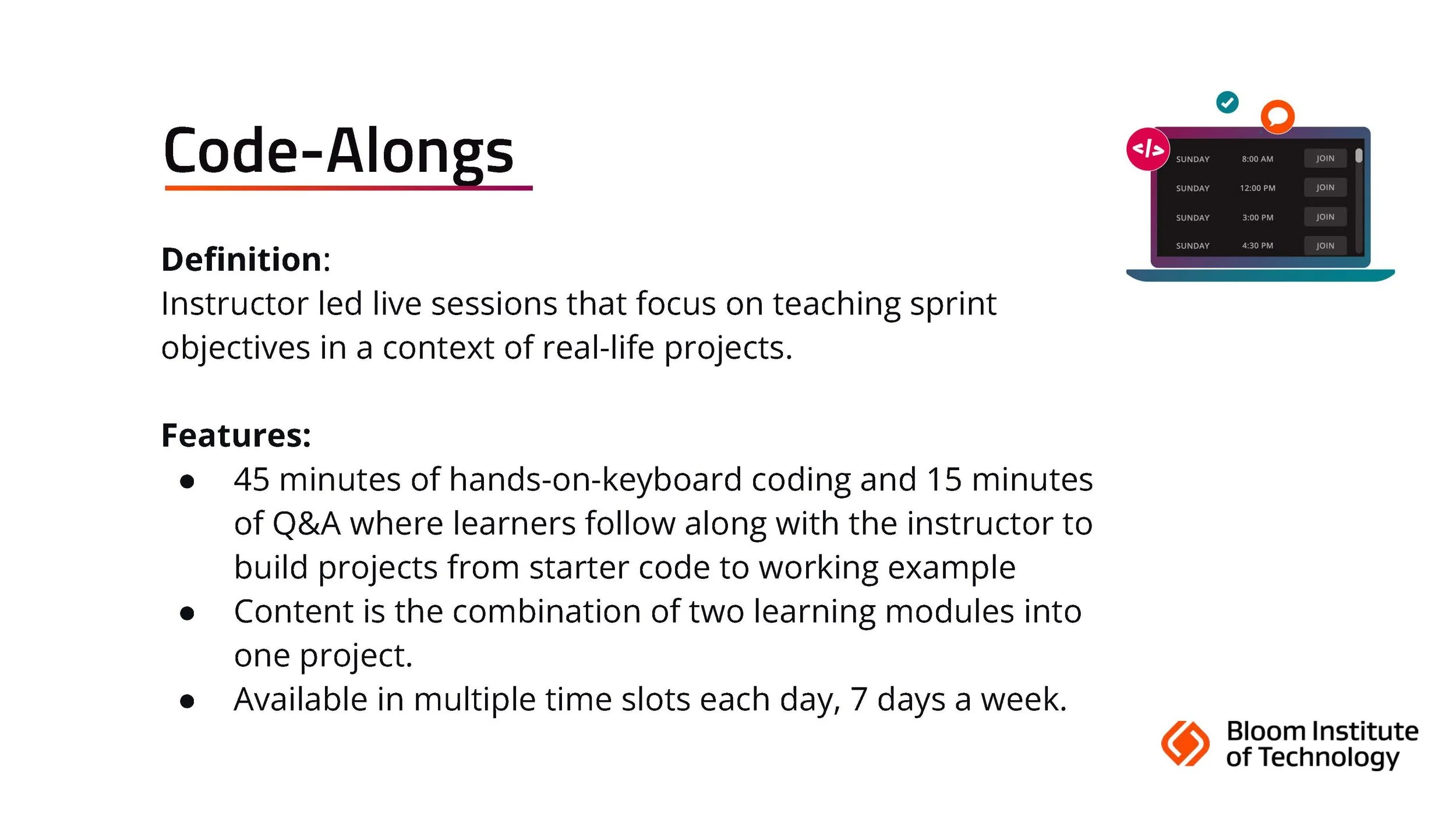
Apply through live sessions and real-world scenarios
Support through help resources, coaching, and communication
We redesigned the learning experience as a connected system across platforms, content types, and support layers.
Creating Content Consistency at Scale
As we transitioned from live instruction to asynchronous learning, we could no longer rely on individual instructors for consistency. It had to be built into both the content and the production system.
To support scalability, I aligned content, structure, and delivery into a unified framework, defining the standards, templates, and guidelines that structured how content was created and delivered.
System Components
Shared tone, voice, and structure
Repeatable patterns for exercises and projects
Standardized templates for lessons and activities
Defined best practices for writing, clarity, and instructional flow
Shared expectations to align contributors across programs
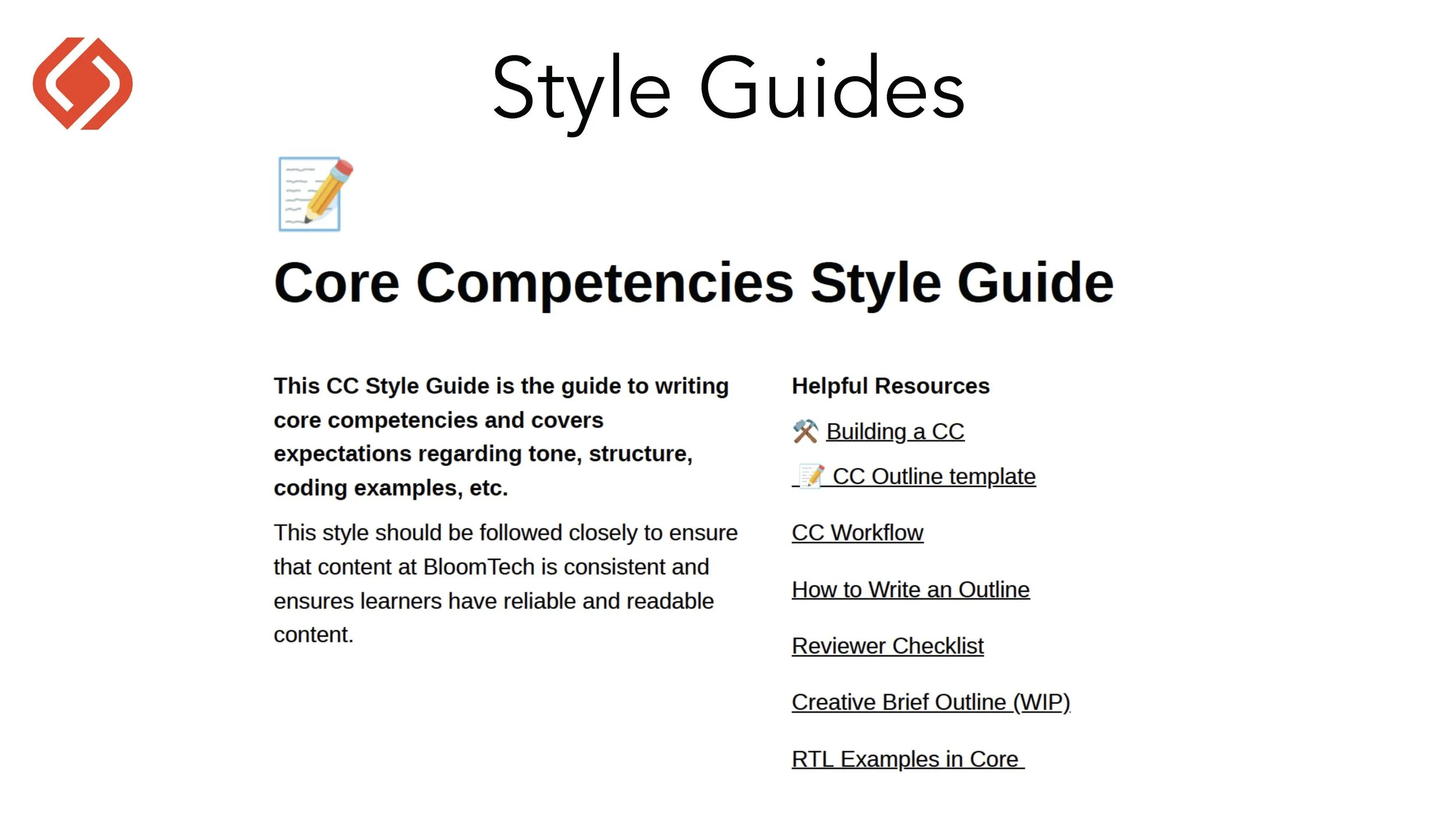
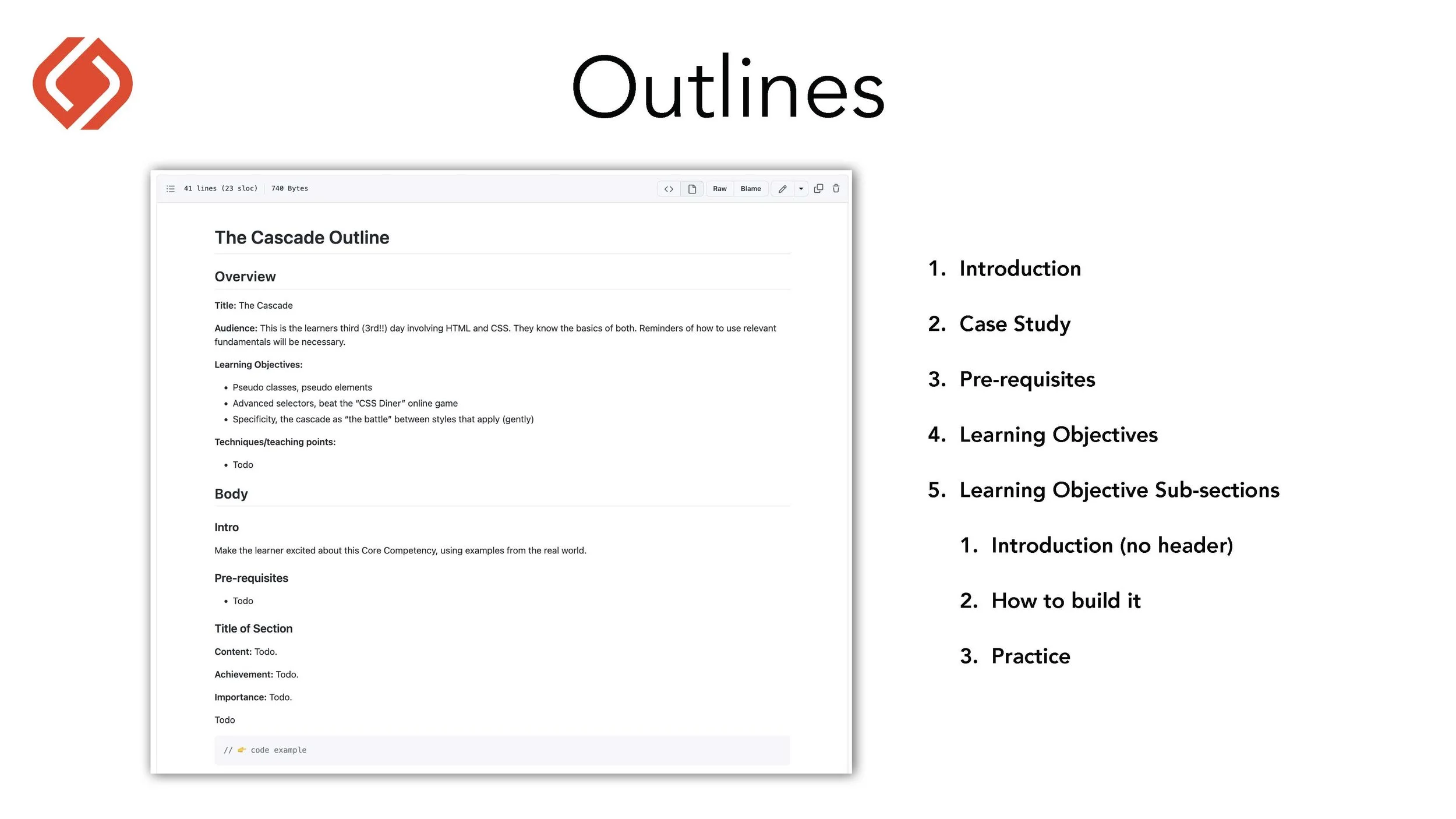
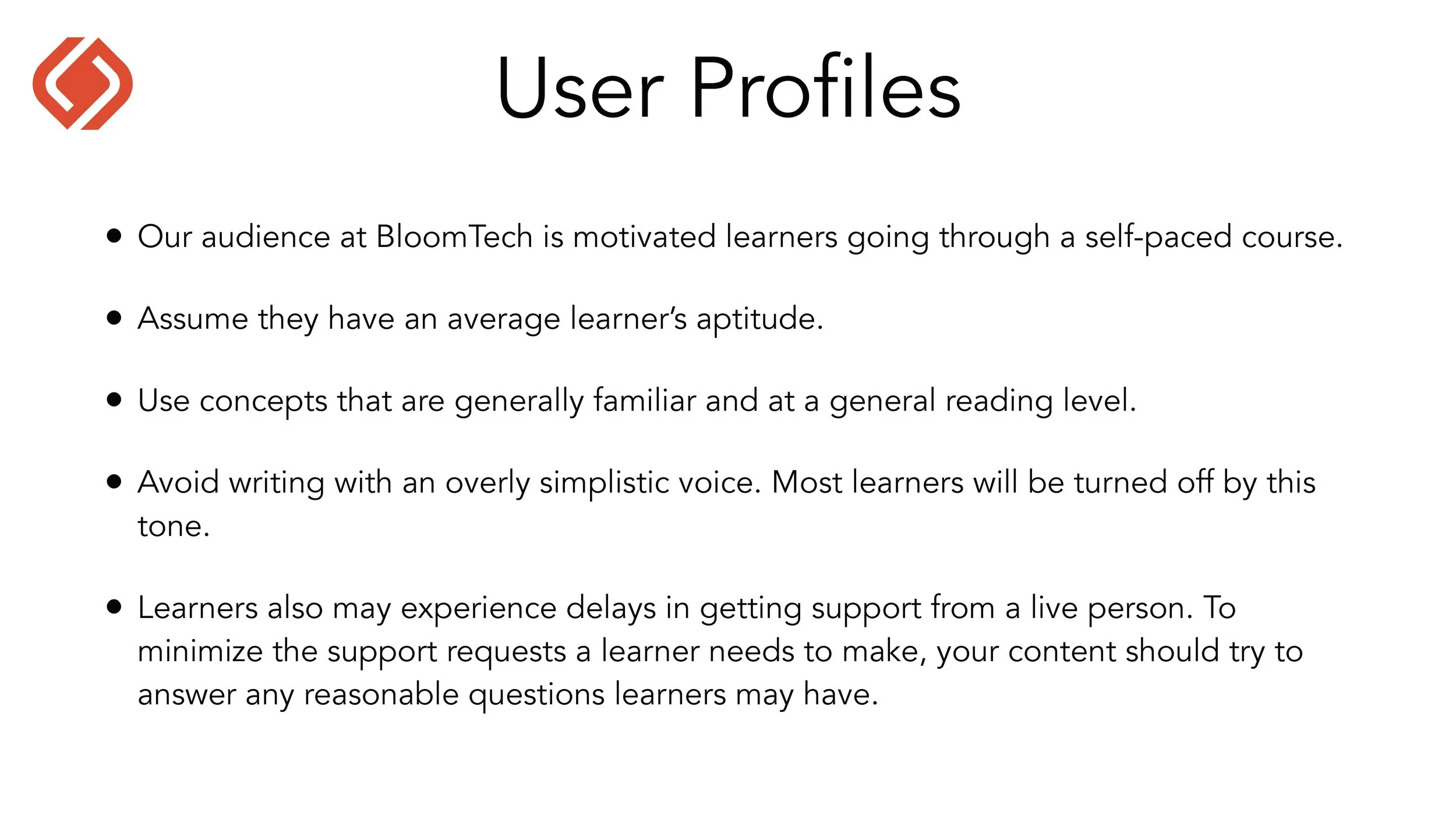
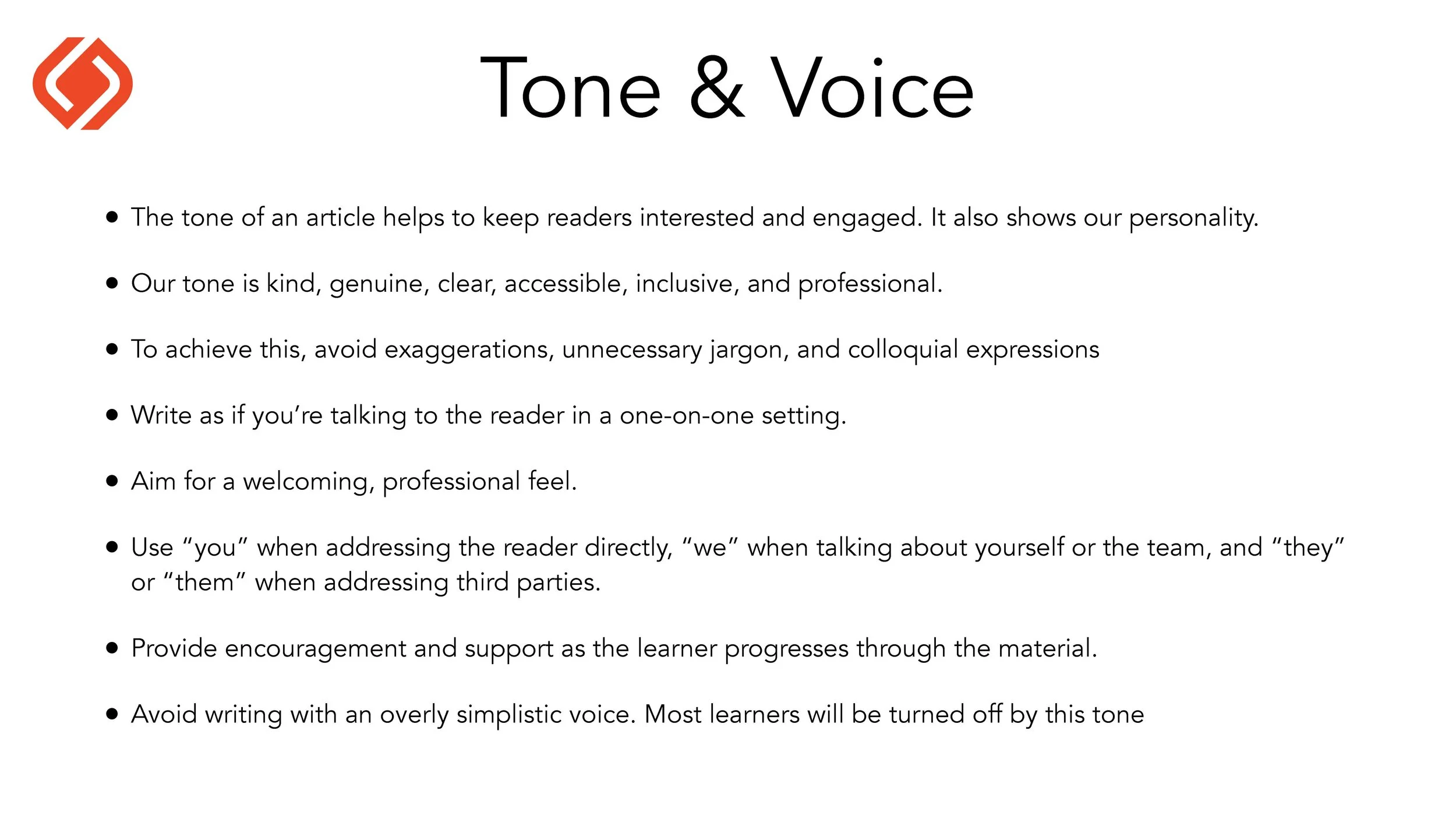
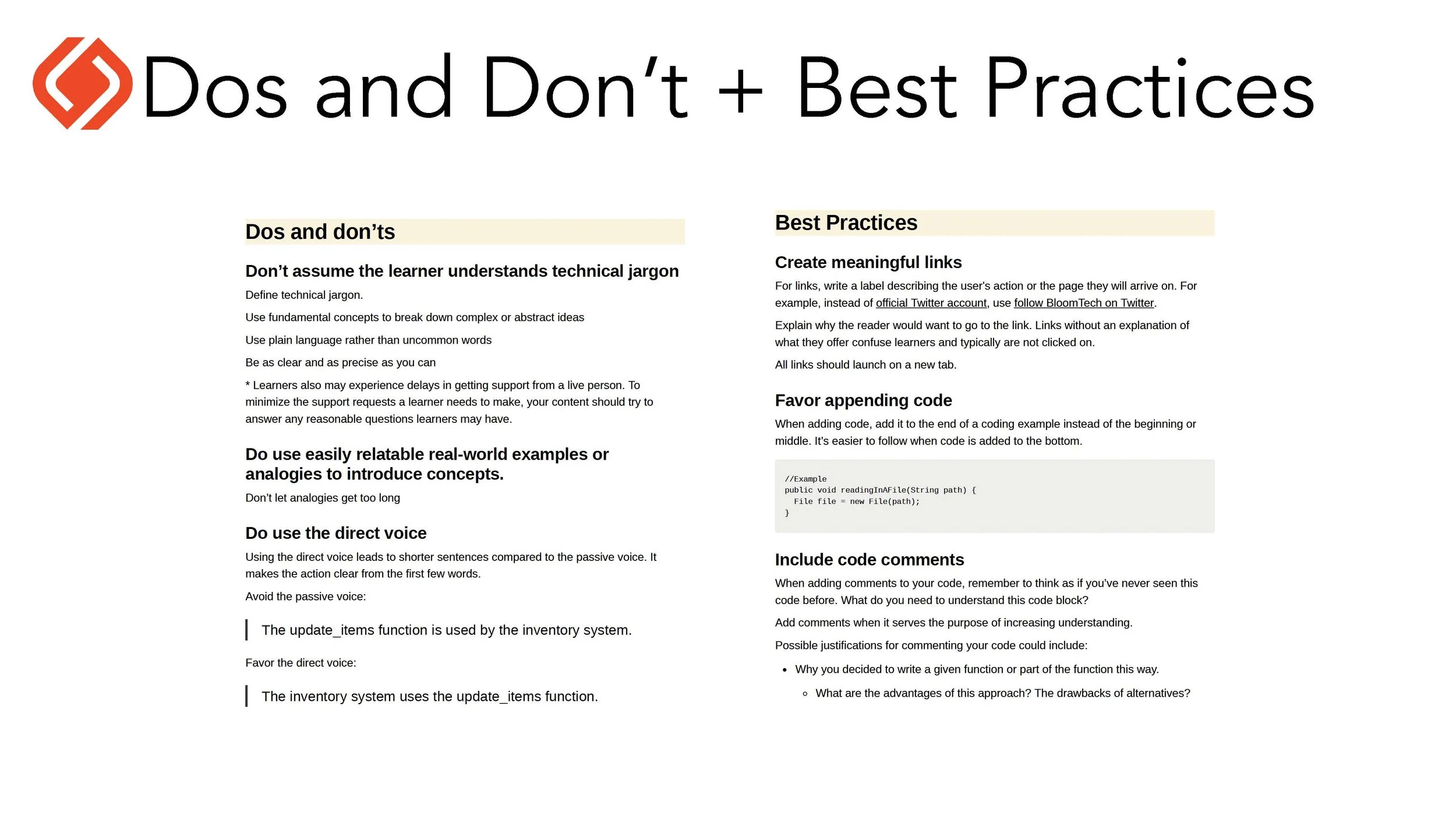
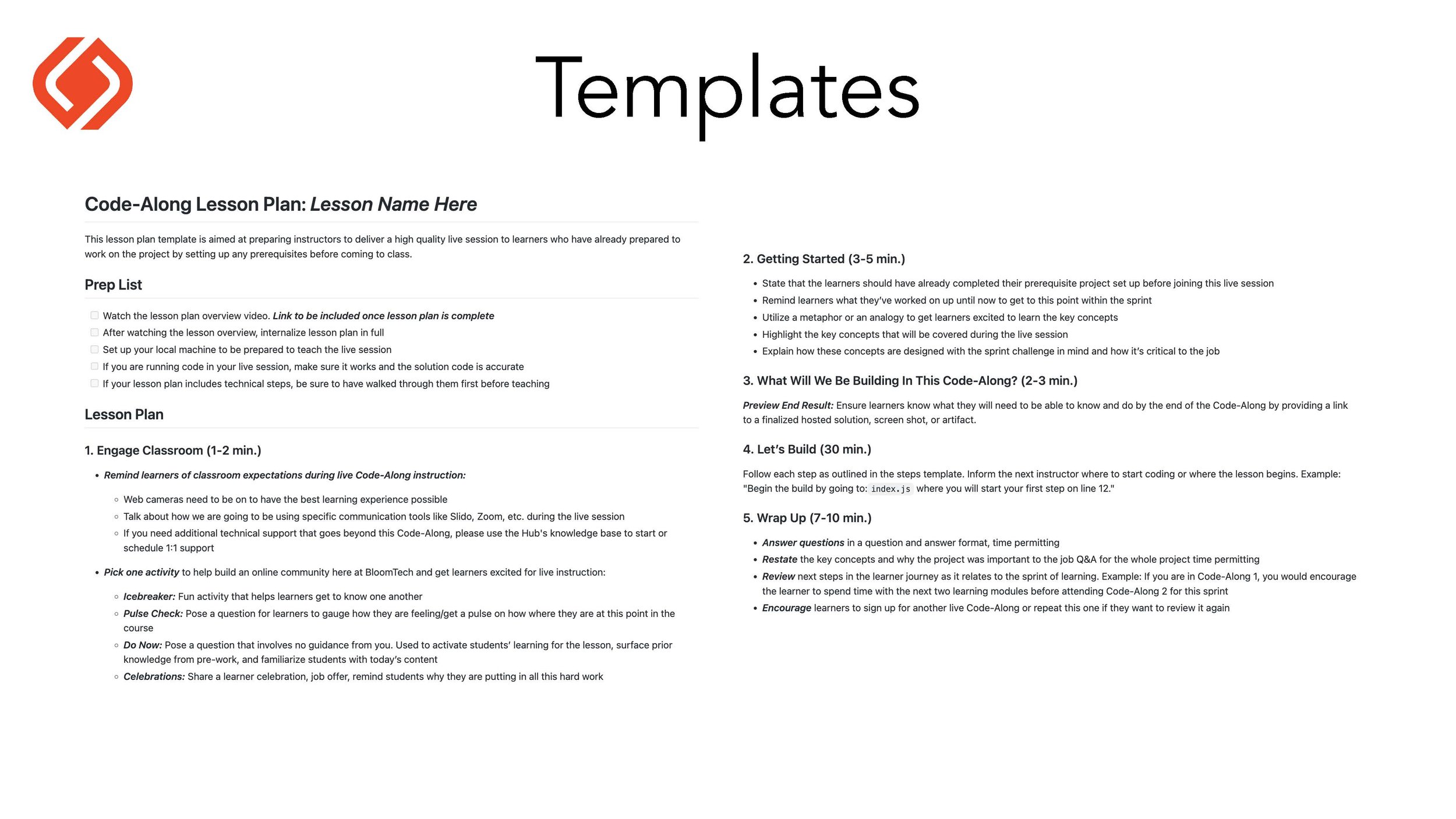
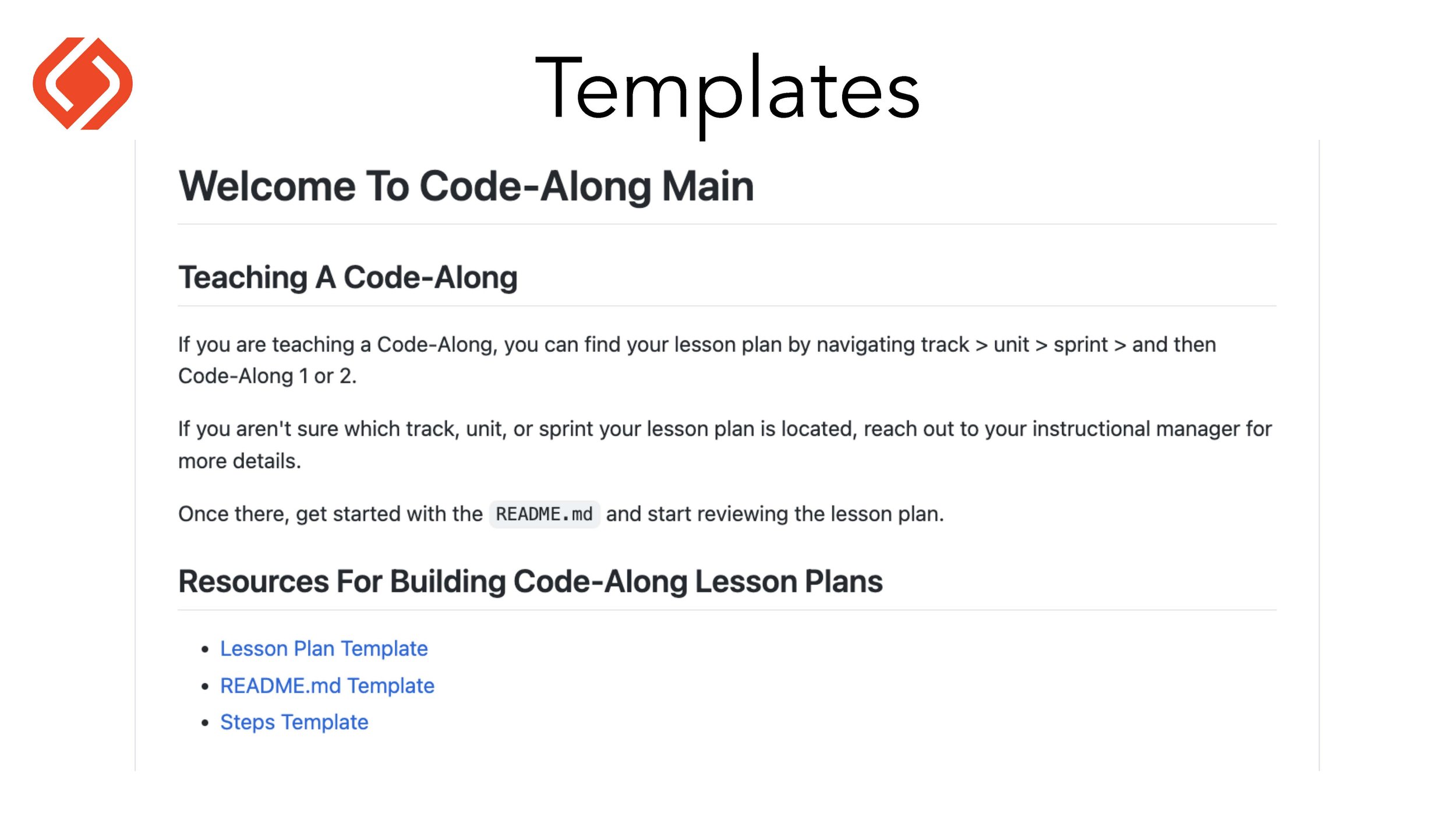
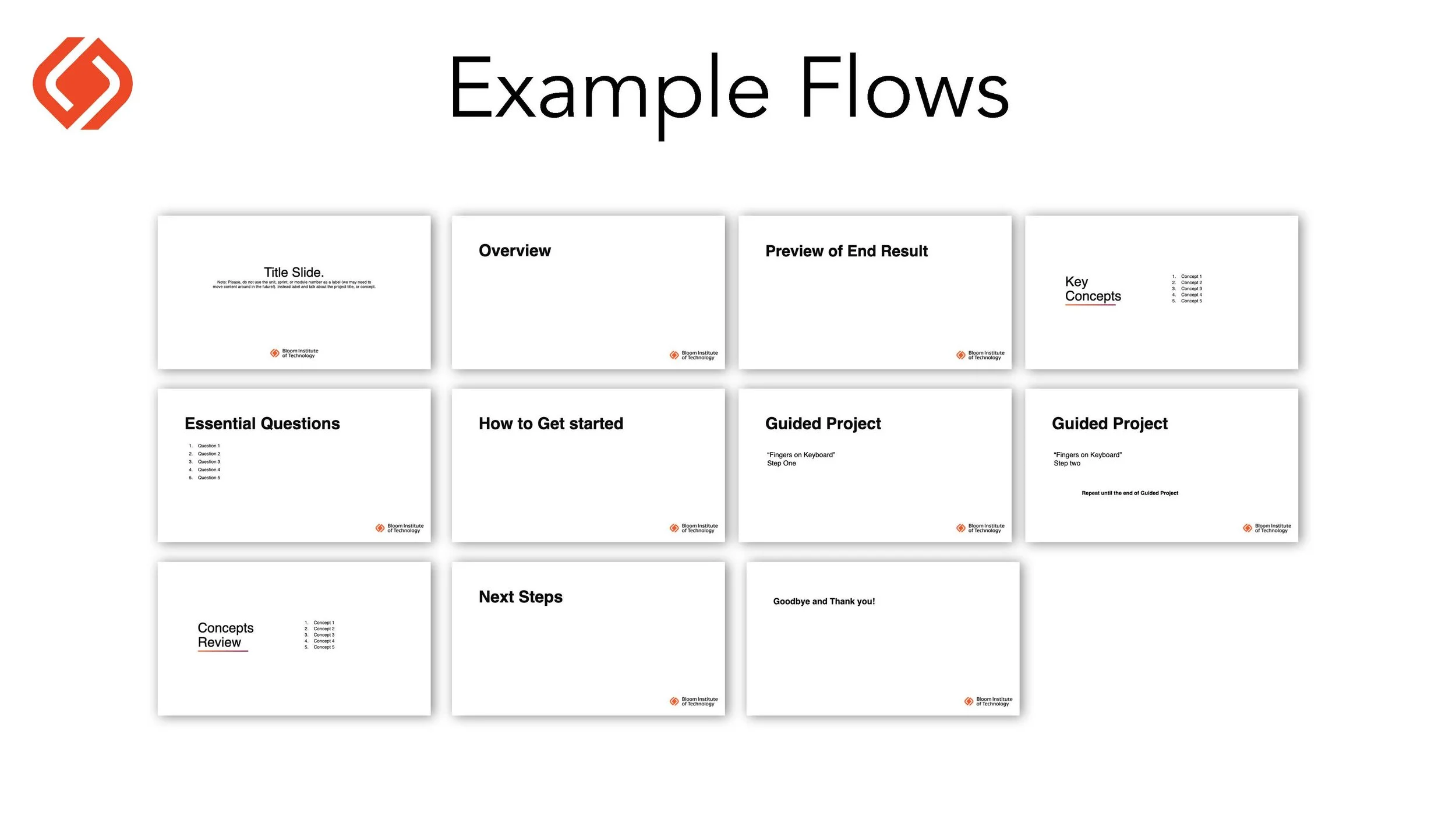
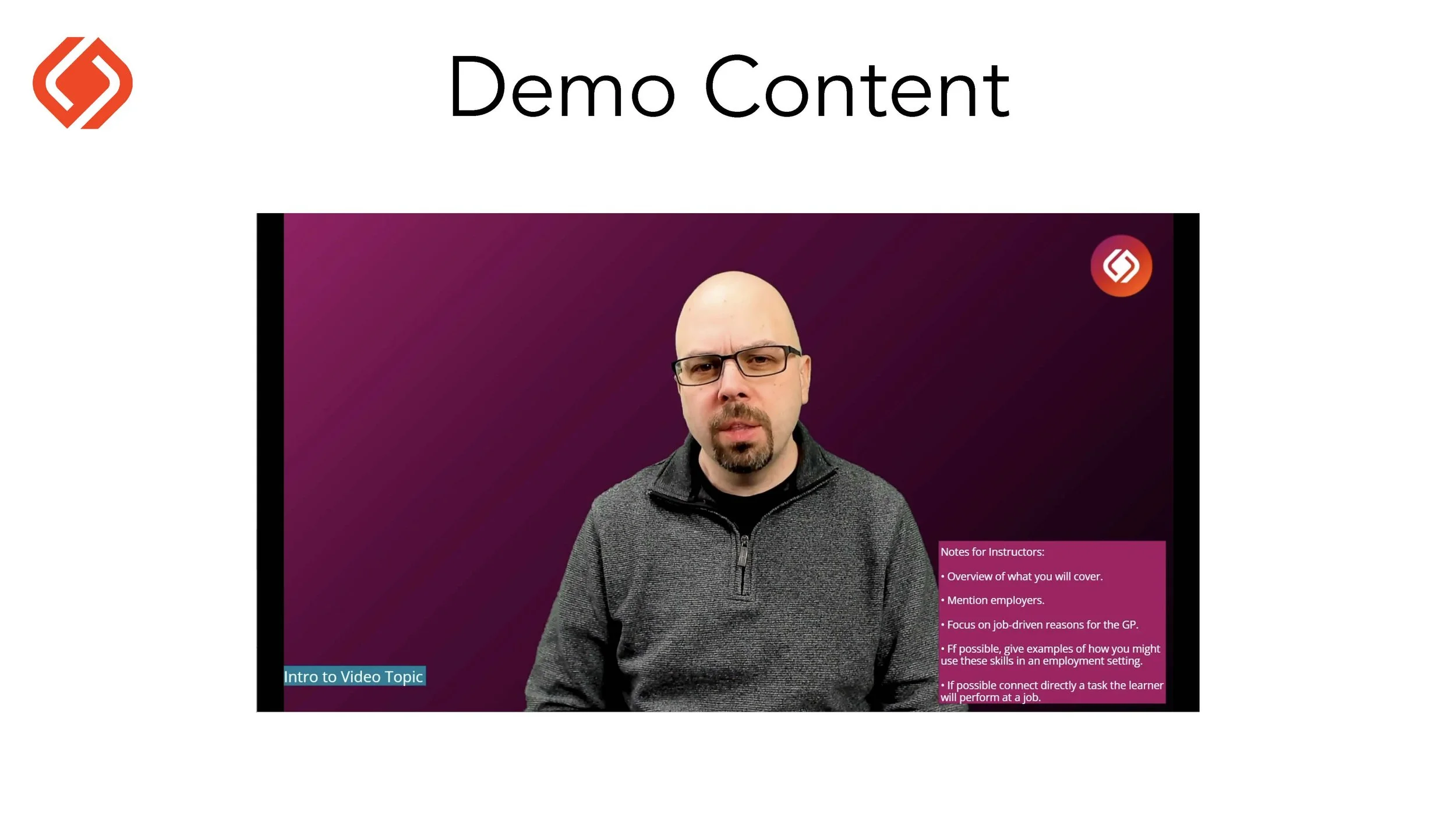
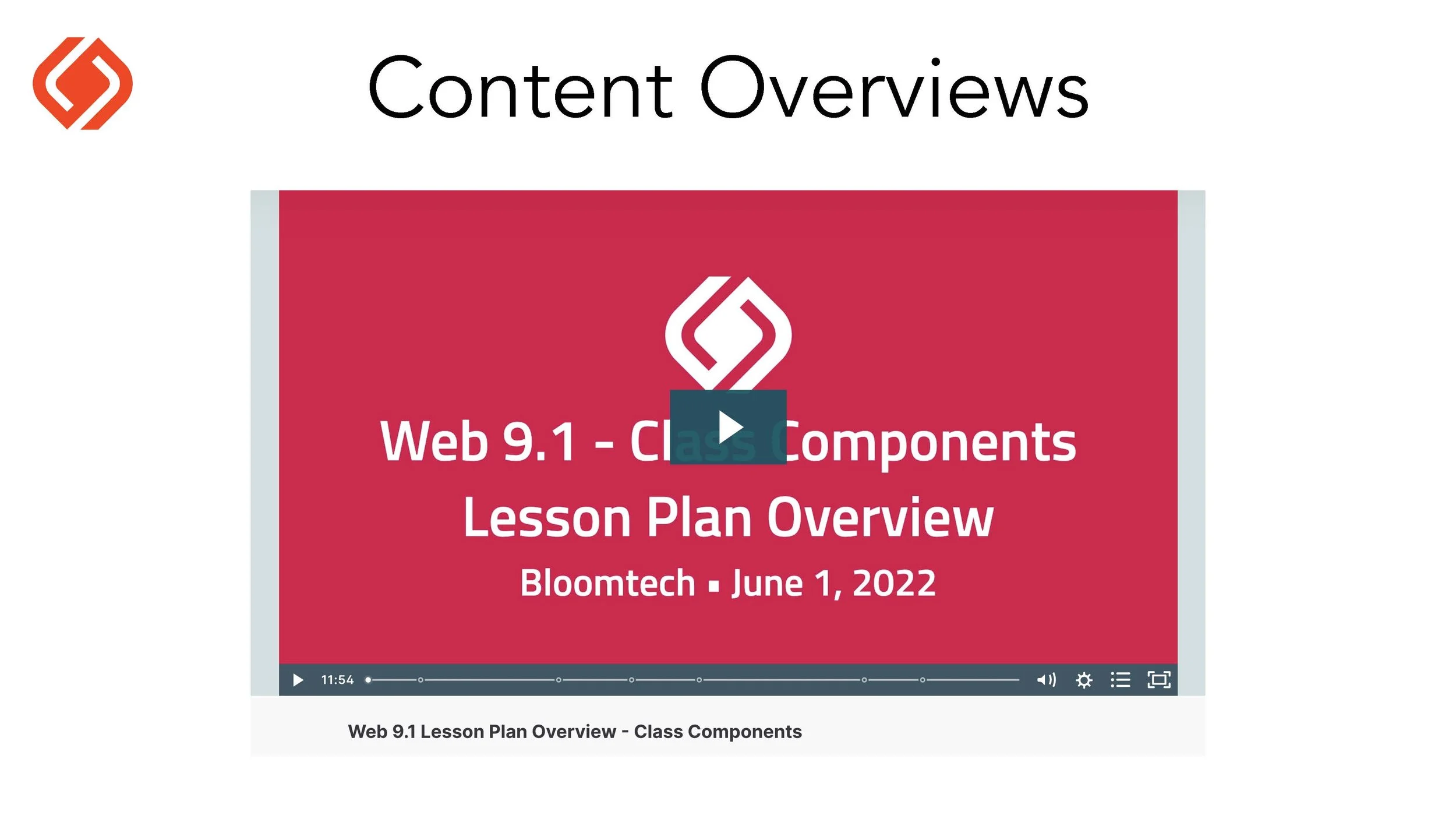
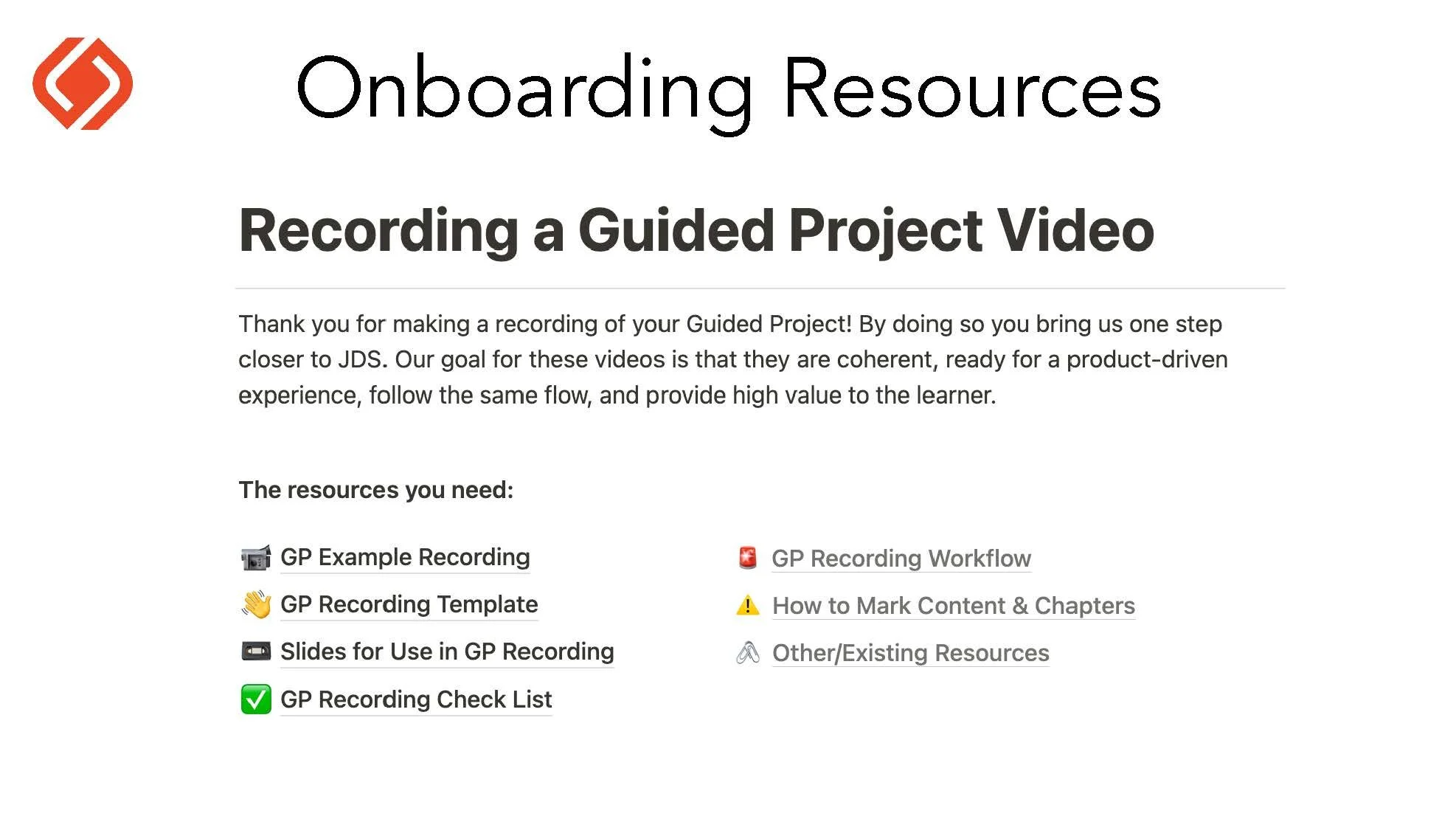
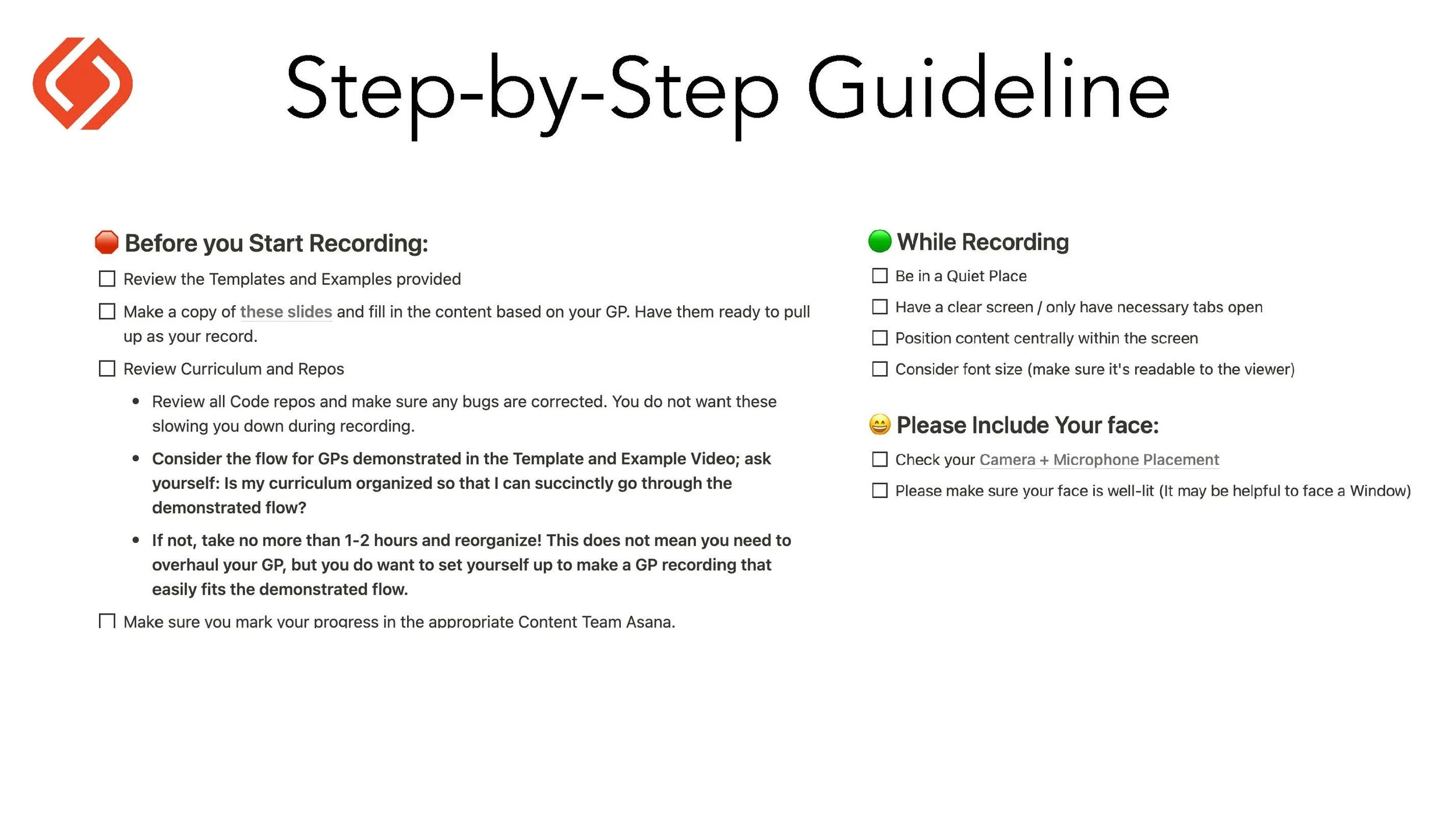
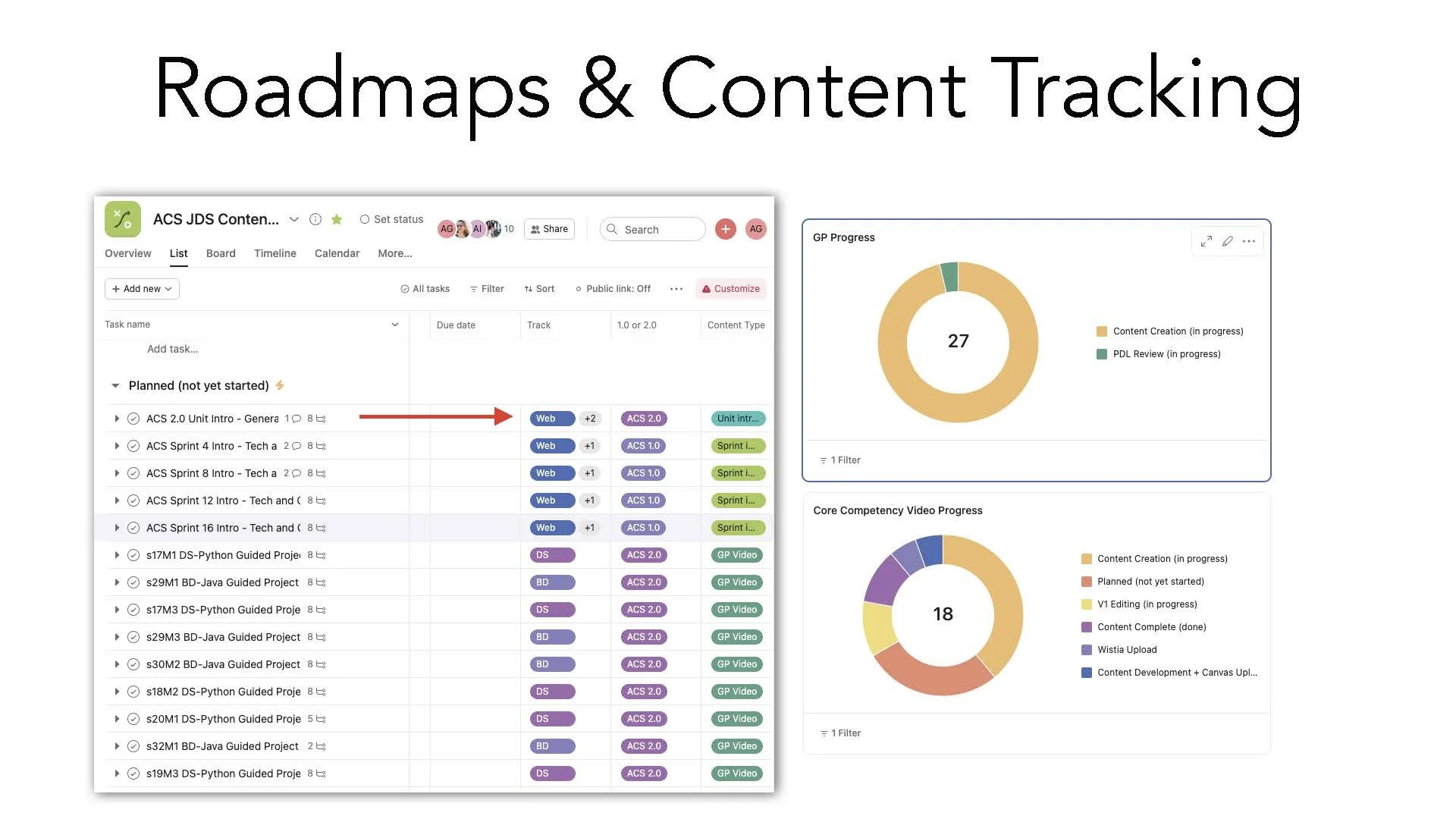
As a result of these guidelines, content quality was consistent across programs and formats. Expectations, progression, and support were easy to understand and navigate.
Impact
Our work to develop scalable production systems that enable consistent, thoughtful content across formats, while supporting ongoing creation and maintenance, resulted in a more structured and cohesive experience for learners.
Consistent learner experiences across courses, programs, and media
Scalable production of curriculum assets
Faster onboarding for new contributors
Improved clarity and usability of content
A cohesive, system-driven learning experience.
This project shifted how I think about design. Rather than focusing on individual assets, I focused on building systems that support learning and behavior over time. At this scale, consistency and clarity don’t emerge on their own. They have to be designed.